Story
Loading the latest story
Please wait while the article is prepared.
Loading article content…
Loading article content…
Story
Please wait while the article is prepared.
Loading article content…
Loading article content…

Business
Stakeholders at the 10th She Code Africa Summit have urged women entrepreneurs to focus on financial competence and market viability before seeking external capital. The event highlighted the importance of bootstrapping and effective storytelling in bridging the gender funding gap in Africa's tech ecosystem.
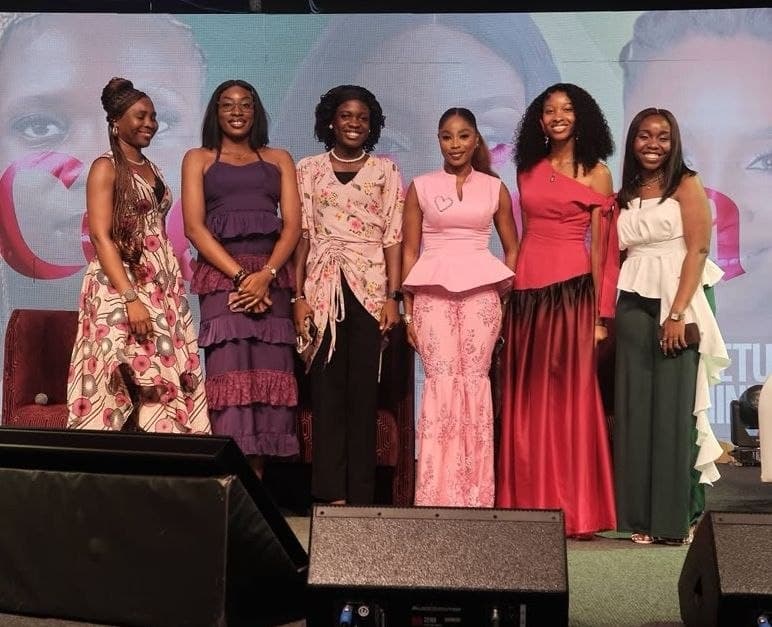
Women entrepreneurs have been advised to prioritize building viable businesses and understanding their market dynamics before approaching external investors. This guidance was a focal point of discussions at the 10th annual She Code Africa Summit in Lagos, themed "A Decade of Impact: African Women Architecting the Digital Future."
The summit featured a dedicated "Capital Track" panel which explored the specific challenges women face when accessing funding. Experts noted that while capital is essential for scaling, the foundation of the business—including its financial figures and competitive positioning—must be solid enough to withstand investor scrutiny.
Damilola Teidi-Ayoola, Principal of Platform and Networks at Ventures Platform Fund, emphasized that investors prioritize founders who can clearly articulate their value proposition and demonstrate a granular understanding of the numbers driving their operations.
It’s important for you to know the type of business you’re running and the type of capital that is best suited for that business.
— Damilola Teidi-Ayoola, Principal, Platform and Networks, Ventures Platform Fund
Beyond business fundamentals, Teidi-Ayoola addressed the systemic barriers within the investment landscape. She called for a greater representation of women as general partners and capital allocators, arguing that a more diverse group of decision-makers would bring different perspectives to the funding process.
She urged support organizations to deliberately design programs that attract female founders rather than simply declaring initiatives open to all. Addressing both conscious and unconscious biases remains a critical step in ensuring that women-led businesses receive an equitable share of available investment.
Esther Otusanya, representing Entrepreneur Experience at Endeavor Nigeria, added that investors look beyond the pitch to evaluate the underlying unit economics. She advised founders to understand their cost structures from the early stages and be prepared to show how additional capital will lead to measurable milestones, such as market expansion or new revenue streams.
Damilola Olokesusi, Chief Executive Officer and Co-Founder of Shuttlers, shared her practical experience of building a company without immediate external funding. She spent the first four years of Shuttlers' existence relying on grants, customer revenue, and manual processes involving WhatsApp and Google Maps to prove the concept.
This period of bootstrapping allowed Olokesusi to build a track record of customer traction and financial history before seeking to scale. She highlighted that communicating with investors is a distinct professional skill that founders must intentionally develop to succeed in the fundraising arena.
You need to learn it. It’s a different skill. Just the same way you have finance skills or accounting skills, communication skills is something that you need to learn.
— Damilola Olokesusi, Chief Executive Officer and Co-Founder, Shuttlers
Ada Nduka Oyom, the Founder and Executive Director of She Code Africa, reflected on the organization's growth since its inception in 2016. What began as an initiative to increase the visibility of women in technology has evolved into a structured community providing scholarships, mentorship, and technical learning opportunities across the continent.
According to Nduka, the organization has already impacted over 65,000 women in Africa, with 500 directly benefiting from specific intensive initiatives. The goal for the next decade is to move beyond visibility and focus on creating robust systems that allow African women to participate meaningfully in the global digital economy.
The summit also included a fireside chat with Adeife Adeoye on business consistency and various track sessions focusing on the future of the industry. These discussions underscored the shift toward building sustainable, high-growth technology companies that can operate independently of their founders' direct daily involvement.